SPARQL request parsing
1 Parser creation options
1.1 Parsing comments
2 Example
3 Unsupported constructs
4 Malformed requests
5 Notes
6 See also
1.1 Parsing comments
2 Example
3 Unsupported constructs
4 Malformed requests
5 Notes
6 See also
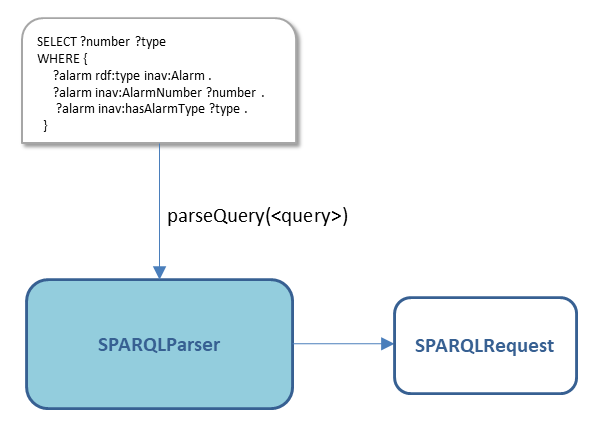
The SPARQLParser class allows to parse SPARQL requests expressed as a String, and generate a SPARQLRequest.
To create a SPARQLRequest from a String:
There are several options to create the parser:
For the moment, some constructs are yet not supported in SPARQL requests parsing. It does not mean that the parsing will fail, but the result will be incorrect in these cases.
The SparqlHelperConfig.setErrorsHandlingType(char errorsHandlingType) specifies how the SPARQLParser should behave for malformed requests.
To create a SPARQLRequest from a String:
- First create a SPARQLParser
- Then parse the request by SPARQLParser.parseQuery(String request)
- Or use SPARQLParser.parseQuery(URL) or SPARQLParser.parseQuery(URL, String) to parse the SPARQL request which is defined in an URL[1]
The SPARQLParser.parseQuery(URL, String) method allows to specify the charset to use when parsing the URL, the SPARQLParser.parseQuery(URL) method assume an UTF-8 encoded content
Parser creation options
Main Article: Prefix declarations
There are several options to create the parser:
- The SPARQLParser(String prefix) creates a parser with a default prefix. By default the
PREFIXdeclarations at the beginning of the request will not be parsed - The SPARQLParser(String prefix, boolean parsePrefix) creates a parser with a default prefix. The
parsePrefixargument specifies if thePREFIXdeclarations at the beginning of the request will be parsed - The SPARQLParser(String prefix, SparqlPrefixDeclarations decl) creates a parser with a default prefix. The
declargument specifies how and if thePREFIXdeclarations at the beginning of the request will be parsed
Parsing comments
By default comments in the SPARQL content are not parsed. The SPARQLParser.setParseComments(boolean parseComments) method allow to keep comments during parsing. Alternatively the SPARQLParser(String prefix, boolean parsePrefix, boolean parseComments) allow to manage the prefix and comments parsing.Example
Suppose the following SPARQL request as a String:SELECT ?zone WHERE { ?zone rdf:type sitac:TaskZone . ?zone sitac:isTasked "true" . }To parse this request, we can do:
   SPARQLParser parser = new SPARQLParser("sitac");
   SparqlRequest request = parser.parseQuery(<the request String>);
Unsupported constructs
Main Article: Unsupported constructs in parsing
For the moment, some constructs are yet not supported in SPARQL requests parsing. It does not mean that the parsing will fail, but the result will be incorrect in these cases.
Malformed requests
Main Article: Malformed requests
The SparqlHelperConfig.setErrorsHandlingType(char errorsHandlingType) specifies how the SPARQLParser should behave for malformed requests.
Notes
- ^ The SPARQLParser.parseQuery(URL, String) method allows to specify the charset to use when parsing the URL, the SPARQLParser.parseQuery(URL) method assume an UTF-8 encoded content
See also
- SPARQLRequest: This article presents the creation of SPARQL requests
- SparqlParserListener: This article explains how to add a listener to the SparqlParser
×
![]()
Categories: Requestparsing
